

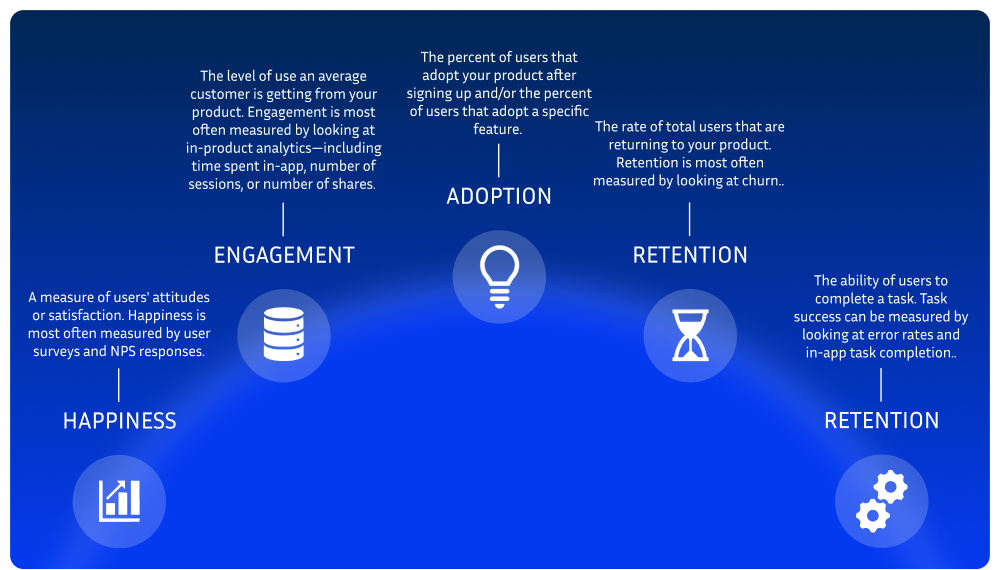
A way for enhancing software’s user experience (UX) is the HEART framework. A company can use the framework to assess any area of its user experience using five metrics that are centered on the needs of the users.
How does Google's HEART framework benefit user experience?
The Google HEART framework, which was created based on user experience research by Google, is a way for measuring UX. Internal teams at Google first created the framework after seeing that UX wasn’t being measured properly.
UX designers, at the time, weren’t held to the macro business metrics that their work directly impacts. While there was plenty of efficient way to measure user experience on a micro level-such as time on task and task completion rate-there weren’t any requirements to measure user experience on a macro level.
The HEART framework offers an uncomplicated method for assisting UX teams in identifying specific goals and determining success, even in the modern day with its abundance of tools and best practices for measuring UX efforts.
What is the HEART framework's mechanism?
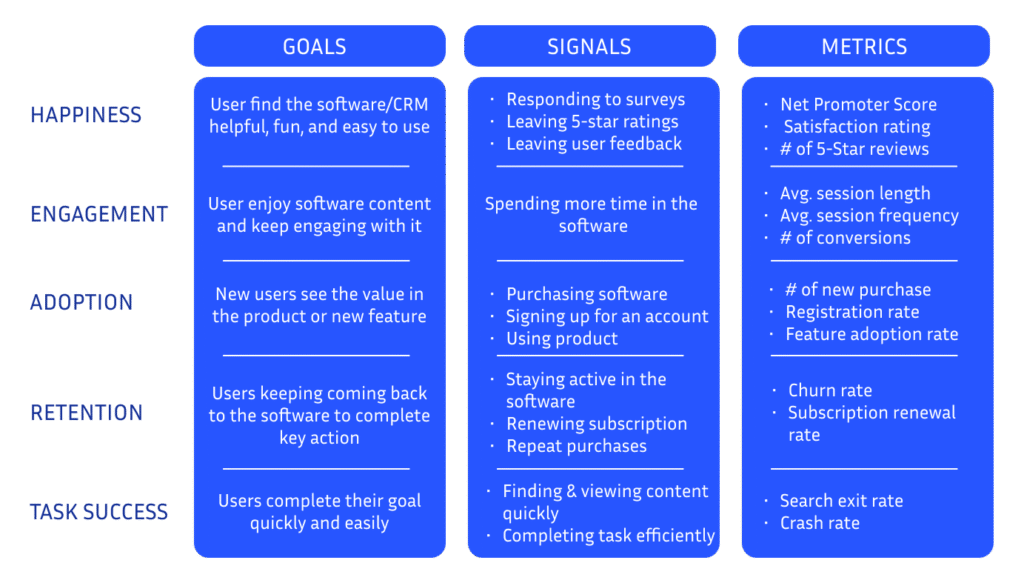
The following picture illustrates how a team would utilize this framework to define objectives, signals, and measurements for each of the five HEART categories. The Goals-Signals-Metrics structure was developed by Google as well, and it is fairly simple.
Essential Transaction Codes Unveiled
The HEART framework’s ability to take into account both micro and macro data to assess the effect of a product’s user experience is what makes it so powerful. While the other UX indicators have an impact on value, retention has the closest tie to present and future revenue.
How to use HEART to increase user “Happiness”
Engagement is used to gauge habitual behavior, which develops after a consumer adopts a product. In a world filled with distractions, it can be challenging to develop and grow habits for using a product.
You can use the following techniques to boost user engagement.
Cross-Platform Promotion
Encourage desktop consumers to download your products’ mobile versions. Considering that users are present across many devices, it is reasonable to believe that this behavior promotes engagement.
Send users a welcome email after they sign up for your product on a desktop, for instance, encouraging them to download the mobile app. Consider the user advantage instead of using the conventional messaging. Direct links between the activity (downloading the software) and value should be made in the messaging.
Cross-Product Promotion
You can also boost user engagement by improving the integration of your products. Show users the software’s or products you already have and which they can download for the best experience.
How to use HEART to increase user “Engagement”
Engagement is used to gauge habitual behavior, which develops after a consumer adopts a product. In a world filled with distractions, it can be challenging to develop and grow habits for using a product.
You can use the following techniques to boost user engagement.
Cross-Platform Promotion
Encourage desktop consumers to download your products’ mobile versions. Considering that users are present across many devices, it is reasonable to believe that this behavior promotes engagement.
Send users a welcome email after they sign up for your product on a desktop, for instance, encouraging them to download the mobile app. Consider the user advantage instead of using the conventional messaging. Direct links between the activity (downloading the software) and value should be made in the messaging.
Cross-Product Promotion
You can also boost user engagement by improving the integration of your products. Show users the software’s or products you already have and which they can download for the best experience.
How to use HEART to increase user “Engagement”
Engagement is used to gauge habitual behavior, which develops after a consumer adopts a product. In a world filled with distractions, it can be challenging to develop and grow habits for using a product.
You can use the following techniques to boost user engagement.
Cross-Platform Promotion
Encourage desktop consumers to download your products’ mobile versions. Considering that users are present across many devices, it is reasonable to believe that this behavior promotes engagement.
Send users a welcome email after they sign up for your product on a desktop, for instance, encouraging them to download the mobile app. Consider the user advantage instead of using the conventional messaging. Direct links between the activity (downloading the software) and value should be made in the messaging.
Cross-Product Promotion
You can also boost user engagement by improving the integration of your products. Show users the software’s or products you already have and which they can download for the best experience.
How you can improve user “Adoption”
Product adoption can refer to either new user adopting a product as a whole or just one feature or feature set. Even though those situations might appear to be distinct, there are many similarities between how users are presented to a new feature and how they are on boarded to a new product.
User Onboarding
To improve product acceptance, you can employ a range of strategies, from tooltips to an email onboarding series. Make an experience that is relatively easy so that most users can figure out the steps after exploring around for a while.
But keep in mind that this tour is about more than just integrating new users. It’s also about adoption, so make sure to draw attention to the product’s subtler characteristics, such as personalizing or turning on particular features.
Feature adoption
To increase feature adoption, you can take a similar course of action. Use modals, slideouts, tooltips, and whatever else you can think of to inform current users about new features.
How you can improve user “Retention”
It should come as no surprise that retention initiatives require significant investment as they are a key source of revenue for any firm. Use email to remind users of the worth of the product, on a deeper level.
How you can improve user “Task Success”
A user experience designer can implement a number of strategies to improve task success, such as surfacing or enabling typical flows to allow users to complete a work more quickly. Although it can be challenging to identify efforts to increase task success, you can achieve it by implementing subtle UI patterns to direct users to helpful features and functionalities that increase productivity.
Conclusion
Use a variety of communication channels to engage your users. To improve the HEART of your products and boost sales, you can integrate email, feedback forms, tooltips, and modals.
The HEART framework’s fundamental success stems from its capacity to assist organizations in concentrating on developing a product-led user experience. By concentrating firm resources on improving the product experience rather than excessively depending on sales, marketing, and support to scale, a product-led approach tips the scales in the user’s favor. Adopting this new way of thinking requires effort, patience, and dedication. Because of this, we developed the Product-Led Growth strategy.
Because it’s a fact that businesses don’t suddenly become product-led. But if you adhere to Google’s HEART architecture and the Appcues Product-Led Growth Flywheel, you can take a big step toward giving your customers (and your company) the product experience they deserve.